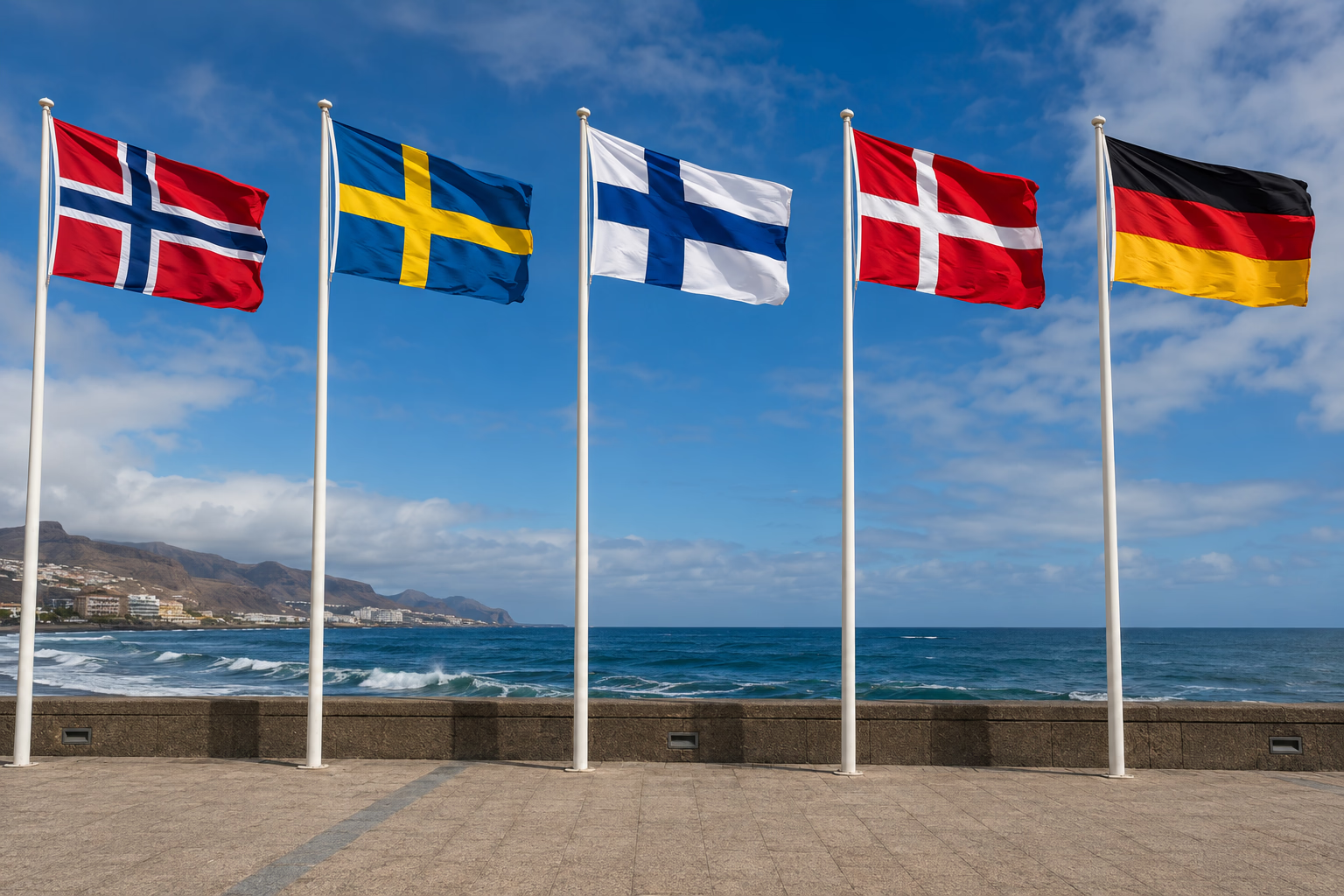
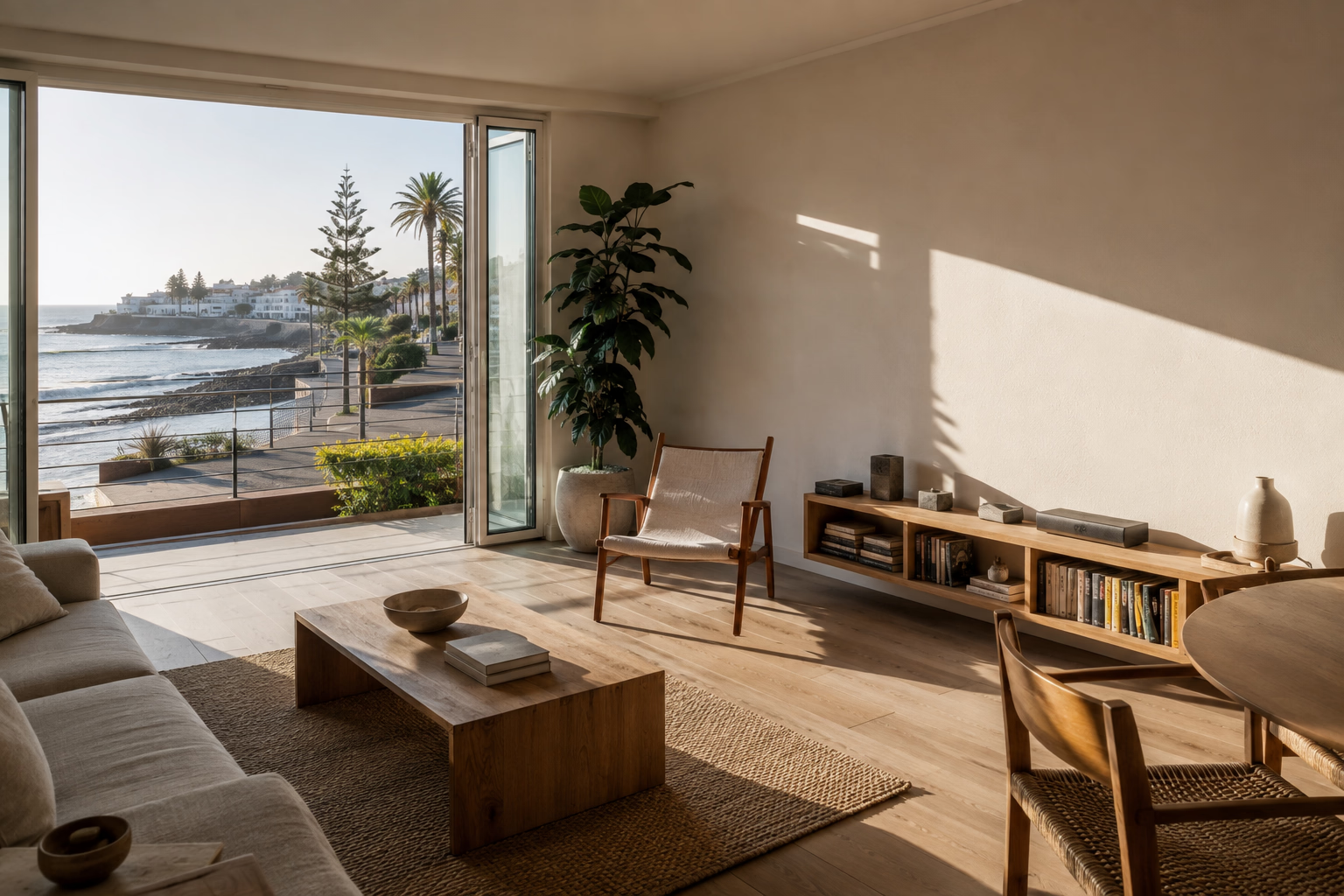
When you look at the horizon from your terrace or walk along the promenade at dusk, you probably recognise every corner of this coast with the calm familiarity of someone who has built a whole second life here. You know how the wind changes throughout the day, how dark the rocks turn when the tide goes out and the gentle way the sun filters through your window at dawn.
You do not need anyone to explain the topography of the Canaries, the variety of their microclimates or the character of their most sheltered places, because your presence here is neither the result of a passing whim nor an impulsive last-minute escape. It is, instead, the result of a decision you considered in meticulous detail, a complicated piece of planning that has required you to coordinate flights, rearrange professional or family schedules, postpone commitments and arrange a place entirely your own for weeks or months.
You have made all that logistical and personal effort for one fundamental reason: because you understood that your wellbeing, your energy and your right to inhabit a season of light were worth crossing an ocean for. The strength of that choice is the invisible foundation on which each of your days beneath this clear Canarian sky rests.
From Scandinavian cold to Tenerife: the story of the first refuge in the south
To understand the full depth of the social and human landscape you inhabit today, it is worth remembering that the movement that brought you here began more than sixty years ago around a handful of Swedes who, driven by different needs, were all looking for the same thing: the light of a warm, steady sun.
In the 1950s, a Swedish veterinarian named Bengt Rylander, whose mobility was being steadily eroded by the effects of multiple sclerosis, decided to escape the relentless severity of Scandinavian winters and to look for an alternative to the conventional treatments of the time in Södern, the word Swedes use for the south when they speak of sun. He did not set out alone: travelling with him was Olle Ryding, another Swede, who suffered from rheumatoid arthritis.
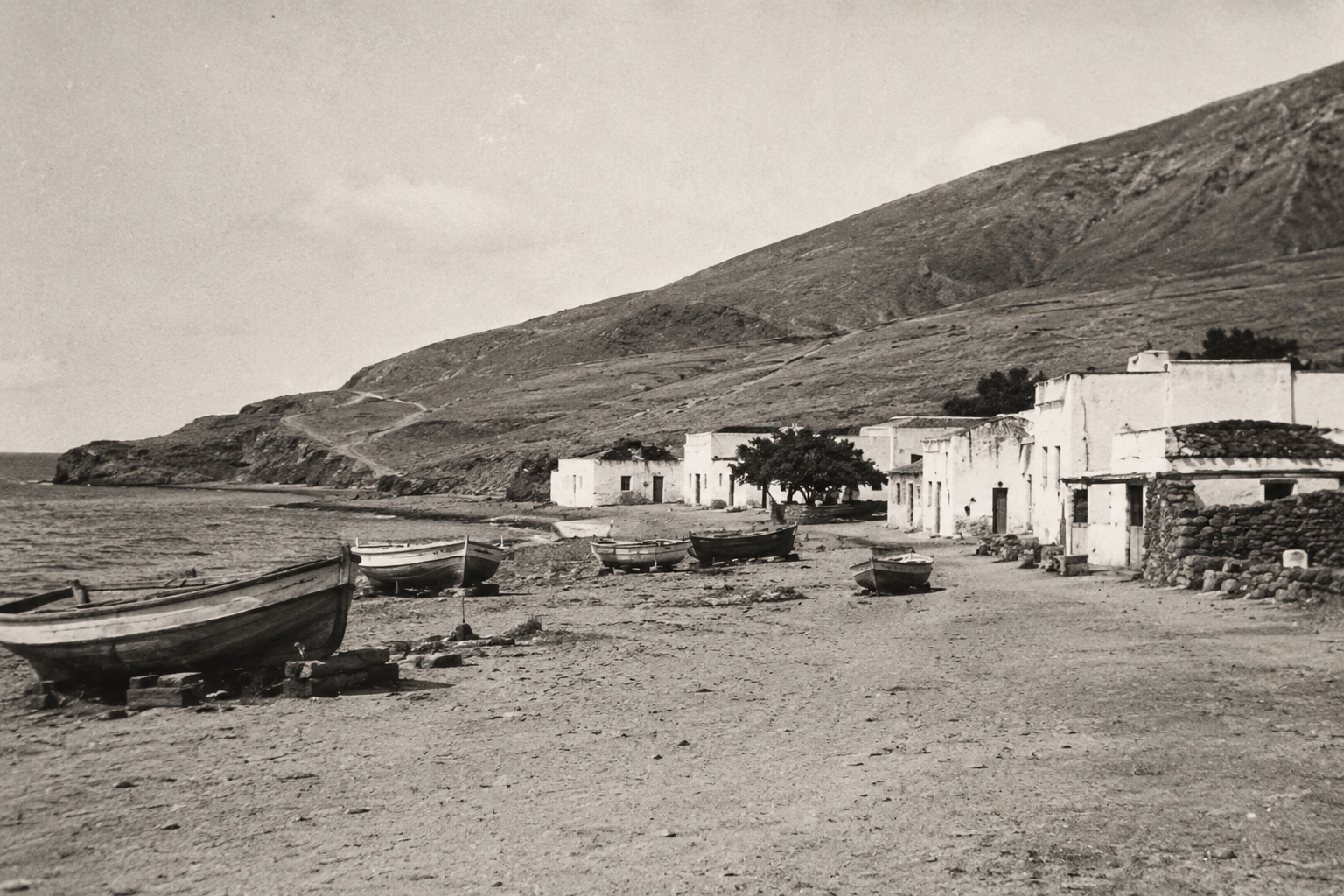
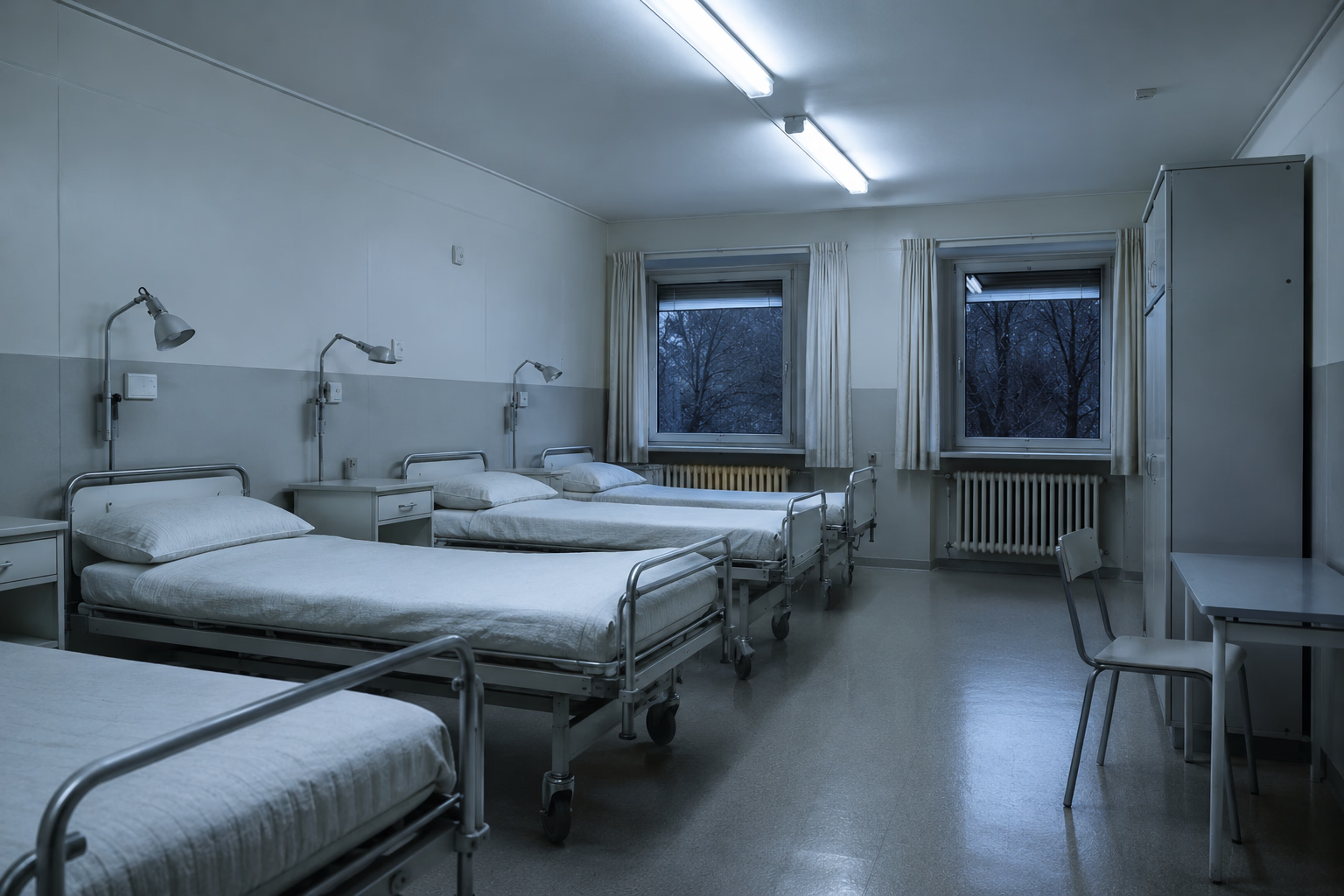
Driven by the confidence and audacity that set pioneers apart, they travelled across the Canary archipelago, leaving the eastern islands behind, until they reached the south of Tenerife and stopped in a fishing village of a few hundred inhabitants called Los Cristianos. There Rylander settled with his wife, Inga, first in an old hotel and later in a small rented house. In the combination of constant sunshine, the mild temperature of the seawater and the island’s climate, he found relief that medicine in the north had failed to give him in its closed rooms, beneath the cold light of fluorescent tubes.
Two diseases that had nothing in common and a single wager: that the climate would succeed where the treatments at home had failed.
A small northern colony gradually formed around Rylander and Ryding, and in 1962 it was formally established as Stiftelsen Vintersol[1].
The foundation built its own premises with Swedish state subsidies secured with the help of the civil servant Ernst Michanek, and it took years of planning and three more to build. It opened in 1965 under the name Centro de Rehabilitación Ramón y Cajal, and representatives of both the Swedish and Spanish governments attended the inauguration. That rehabilitation centre, founded at the water’s edge to provide climate-based therapy and physical exercise in the sea, remains active in the same place, a testament to how the physical need of a few individuals eventually traced the course of a collective migration.
Canarian sunshine as public policy: klimatvård and Behandlingsreiser til utlandet
The experience of Rylander and Ryding did not remain a private story for long. What began as an individual refuge was quickly taken up by the health institutions of the Nordic countries, which recognised the preventive and therapeutic value of the subtropical climate from a pragmatic public-health perspective.
For decades, the governments of Sweden, Norway and Finland set up and funded public klimatvård programmes, climate treatment or climate care, allocating state funds to send patients to these islands during the harshest weeks of the northern winter.
The Swedish regions covered the cost of stays in specialised centres and the patient paid only the health service fee. The arrangement has lasted: even today regions such as Sörmland refer patients with rheumatic and neurological conditions to Vintersol, in Tenerife, and Svenska Re, in Gran Canaria, for up to four months per calendar year[2].
Norway, meanwhile, consolidated the Behandlingsreiser til utlandet programme, treatment trips abroad, which the regulation itself also lists in brackets as klimareiser, climate trips. The programme systematically sent patients with chronic inflammatory conditions, asthma, childhood eczema and the effects of polio to facilities designed for heliotherapy and bathing in saltwater pools[3].
Those journeys were not justified on medical grounds alone. Norsk Revmatikerforbund, the Norwegian rheumatism association, states in writing that the daily cost of rehabilitation abroad is significantly lower than that of the same rehabilitation provided in Norway, and that the effect of the warm climate cannot be reproduced at home. Sending a patient south cost less than treating them in the north.
A state that pays for the ticket to the light has already decided that light is the treatment.
In Finland, patient associations regularly organised trips and rehabilitation courses in Gran Canaria, supported by public funding that remained in place for decades until it was withdrawn[4].
Denmark also funded its own climate treatment with public money from 1971, but directed it to the Dead Sea rather than these islands. The Danes who spend the winter here come on their own[5].
All these programmes were built on the same policy premise: prolonged exposure to sun and warmth was not merely a holiday luxury; it was a treatment, and as such it was funded with public money.
The social map of Nordic and German migration in the Canaries
Decades later, those programmes are still running, but they have stopped being the only reason anyone comes to the archipelago. For the 2026/2027 winter season, 165,014 airline seats went on sale from Norway to the Canaries alone, 19 per cent more than the previous winter, while the increase from Sweden reached 86 per cent[6]. No prescription can account for those numbers. What began as treatment became habit, and habit eventually left its mark on the map.
Over the years, this steady influx of northern Europeans drew a remarkably precise urban and social geography across the islands, whose patterns are still easy to recognise today.
The different communities did not mix evenly or at random, but settled in specific enclaves, recreating in the south the institutions, the culture and the places of worship they relied on at home.
The Norwegians made the area around Arguineguín the centre of their community life: they opened their own school there, Den Norske Skole, in 1974, founded the Norwegian club, Den Norske Klubben, in 1988, and set up the Valle Marina health centre as a hub for their community[7].
The Danes did not create a separate enclave: they settled alongside the Norwegians in Arguineguín, where the Solvang restaurant has been serving Scandinavian food for decades.
A community that spends half the year here needs somewhere to pray but also somewhere to meet, and in Arguineguín both come together under the same roof. Right on the seafront stands the Sjømannskirken, the Norwegian seamen’s church: the institution was founded in Bergen in 1864, arrived on Gran Canaria in 1987 and has since served both as a place of worship and as the main meeting place for the entire Scandinavian colony in the south of the island. It is the most visited of all the organisation’s churches worldwide, with more than a hundred thousand visits in 2012, around a fifth of all the visits recorded by the organisation[8].
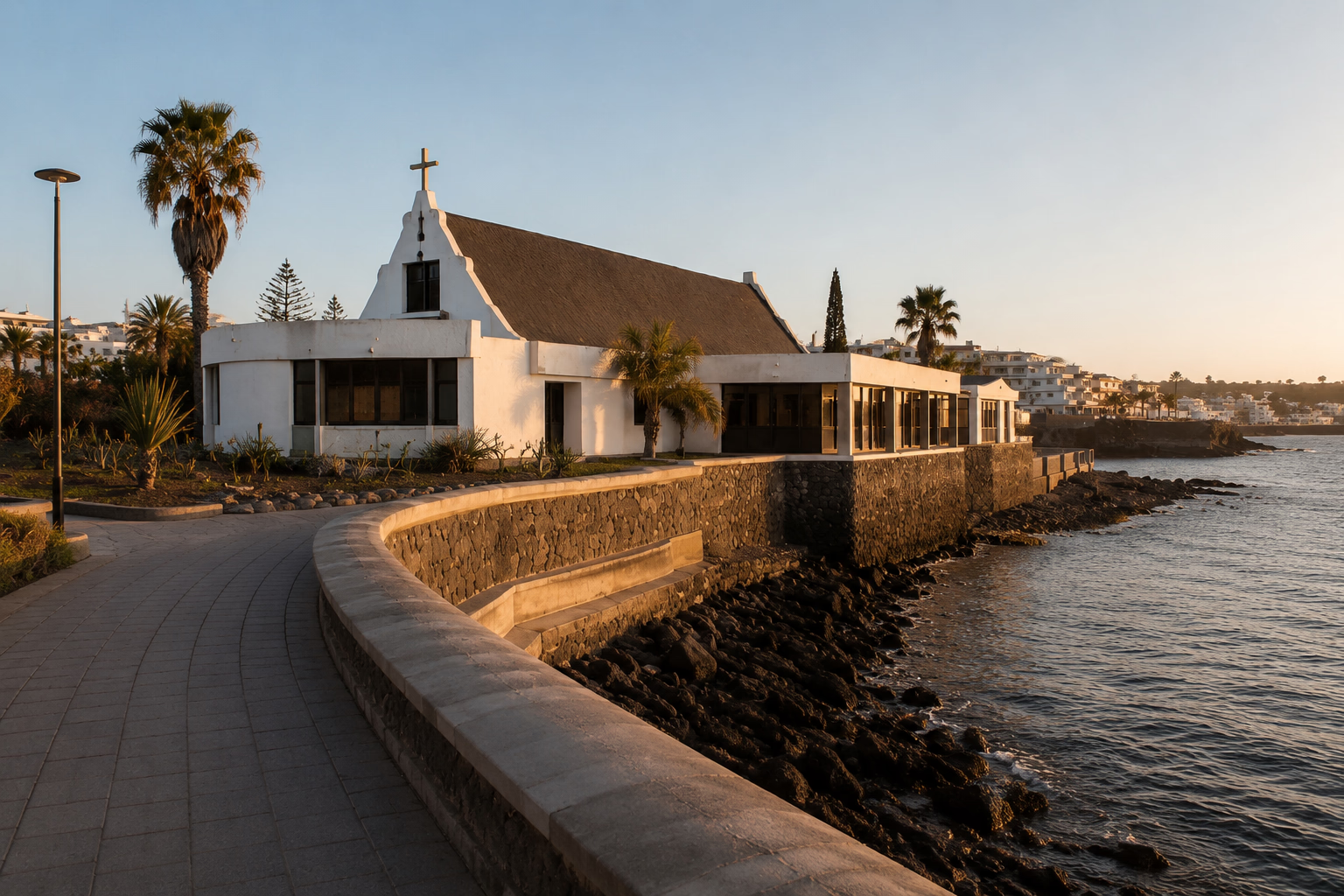
A few kilometres further east, the Swedes made San Agustín their main refuge, but their first base was Las Palmas. The Swedish School, Svenska Skolan, opened there in 1965 and stayed until the colony moved south, where there are more hours of sunshine; today it teaches in San Agustín, inside the Rocas Rojas development. It is a school recognised by the Swedish education authority; it provides in-person teaching for children aged three to thirteen and supports older pupils on site, up to upper secondary level, who are enrolled on the Swedish system’s distance courses. A family can spend the whole winter here without their children missing a school year[9].
The Church of Sweden, the Svenska kyrkan, took the same road. Its parish registers for Gran Canaria begin in 1967, the congregation was formally founded in 1968, and its archive still carries the names of both towns together, Las Palmas and San Agustín. It reached the south in the nineteen eighties, at the same address as the school, inside Rocas Rojas[10]. Two anchors that let the community recreate the everyday life of home here.
In November 2012, on the fiftieth anniversary of Maspalomas-Costa Canaria, the Swedish colony gave the municipality a bronze sculpture: a dalahäst, the painted wooden horse from Dalarna that in Sweden stands as an emblem of the whole country. More than ten years on it still stands on avenida de la Unión Europea, a reminder that the community had long stopped seeing itself as merely passing through[11].
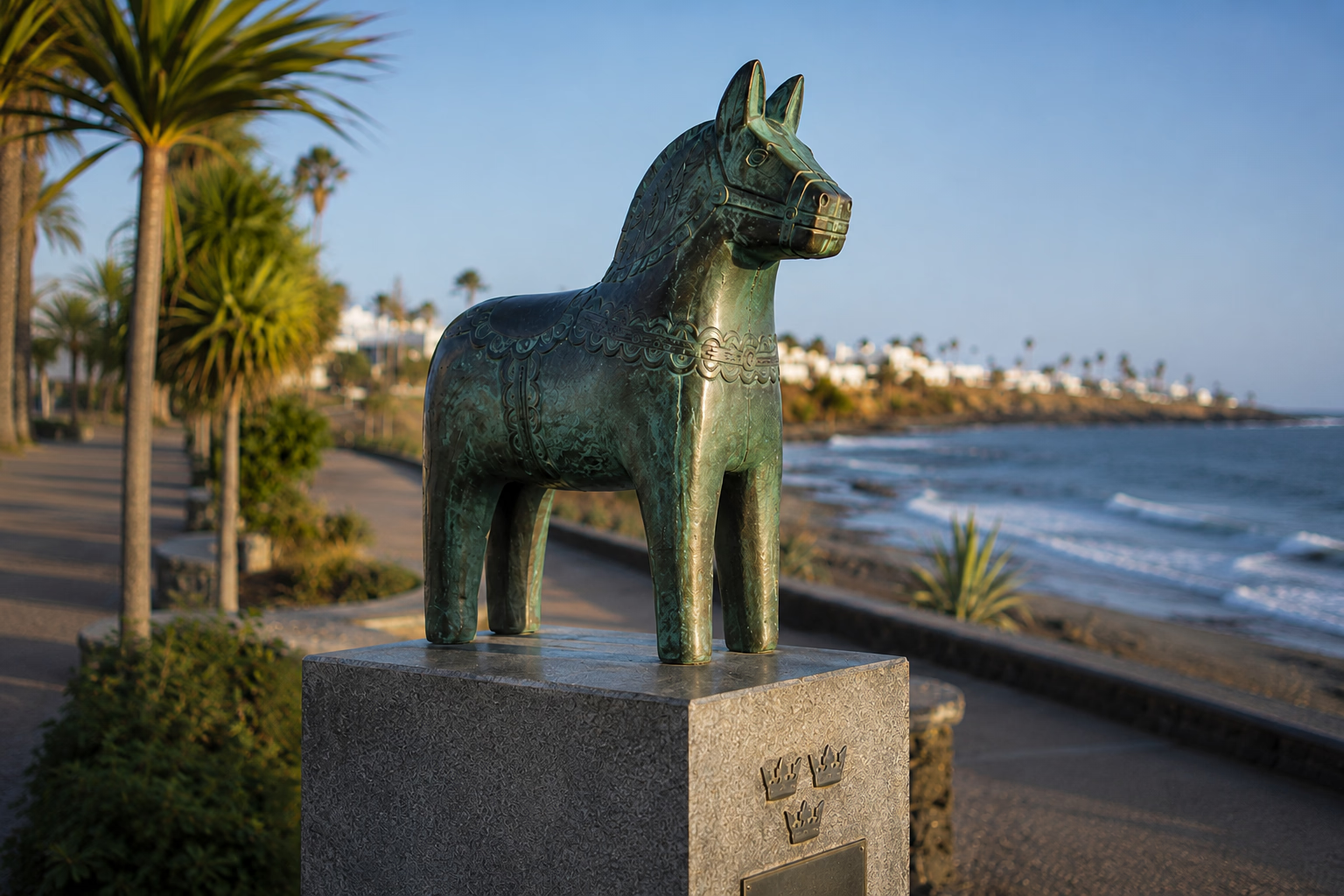
The horse stayed; the chapel, unfortunately, did not. In the spring of 2024 the Church of Sweden drastically cut subsidies to its parishes abroad, the Gran Canaria parish had to dismiss its local staff, and in May it left its premises in San Agustín and put the furniture into storage. The congregation still exists and still holds services, but no longer in its own home[12].
The Finns, meanwhile, established their gathering point in Playa del Inglés, around the Finnish Evangelical Lutheran Parish of Gran Canaria, in Finnish Gran Canarian suomalainen evankelis-luterilainen seurakunta, which operates every year from October to April[13] and closes when northern Europe becomes habitable again.
Services in Finnish are not held in a building of their own, but inside the Templo Ecuménico El Salvador, shared by several denominations: while Norwegians and Swedes built their church, the Finnish community settled under a roof that already belonged to others. Public support did not last either: from the early nineties a Finnish public fund paid for stays in Gran Canaria for people with psoriasis and atopic dermatitis, around two hundred and fifty a year before the pandemic, and that funding ended in 2022[14]. Anyone who spends the Finnish winter in Playa del Inglés today does so largely at their own expense.
Klein-Deutschland: from La Gomera to Fuerteventura, German migration
While people from Scandinavia travelled with the backing of medical prescriptions and state-funded health programmes, Germans began arriving independently, looking for something very different.
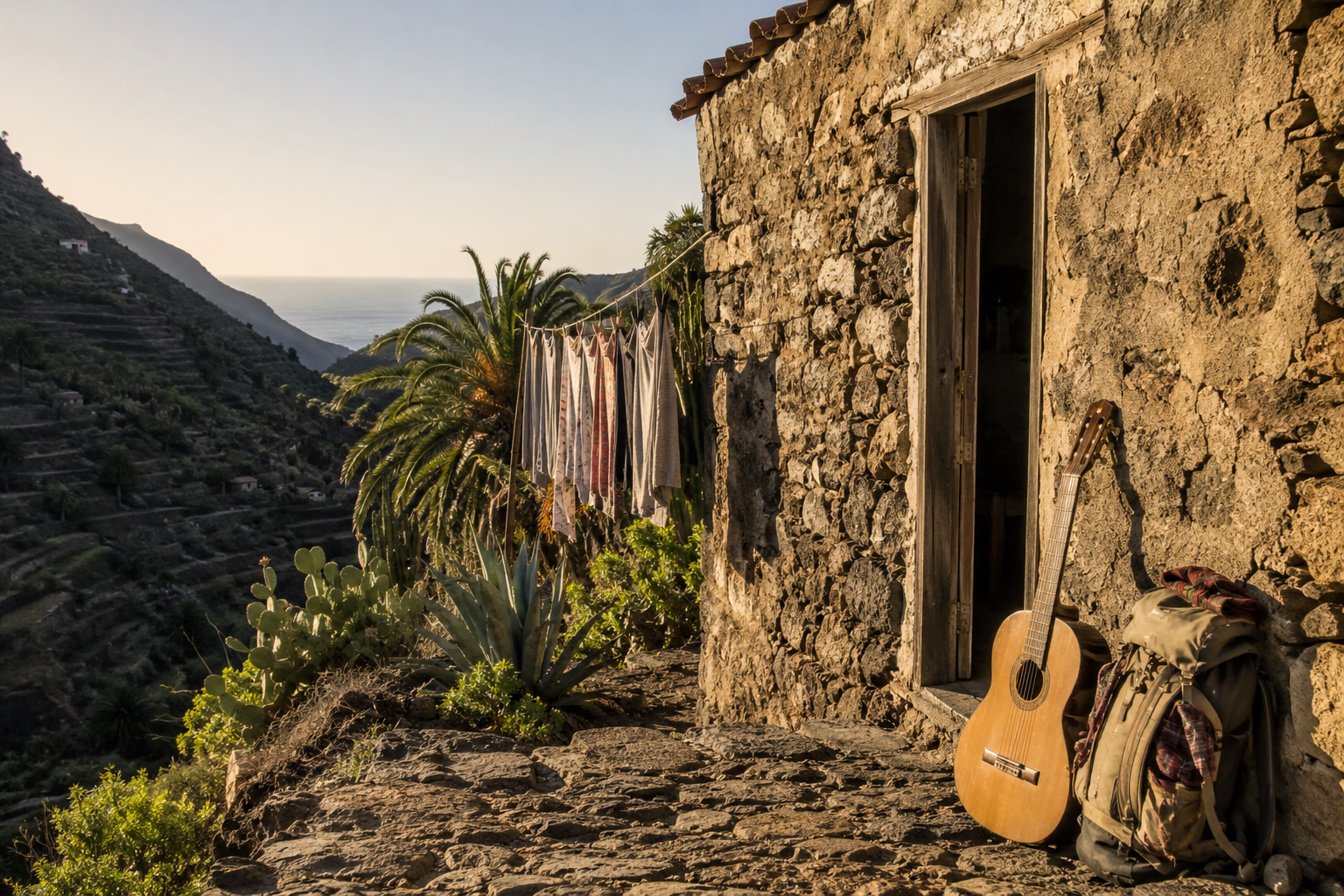
From the late 1970s, thousands of Germans landed with backpacks and guitars on their shoulders in remote corners such as Valle Gran Rey, on La Gomera, an island that at the time did not even have an airport. They came to escape the conservative moral climate, the social rigidity and the political claustrophobia of West Germany at the time.
Many stayed, started families and opened the area’s first vegetarian restaurants and craft workshops. That is how the valley became what Germans themselves came to call Klein-Deutschland[15].
German communities also took root elsewhere in the archipelago, reaching close to four per cent of La Palma’s population by 1 January 2023 and exceeding ten thousand registered residents in Tenerife, while in Fuerteventura they were concentrated in the southern municipalities, where around 2,570 Germans lived[16].
For more than half a century, the Canaries have been the place where northern Europe travels south to find more light and less scrutiny.
The sun of the Canaries and a body that stops settling for less
Sixty years on, that current brings you here, with a whole winter of light ahead of you.
After a few weeks, sun and warm water reduce inflammation, soften the stiffness left by months of darkness and restore to the muscles a suppleness that seemed lost.
No protocol could ever have foreseen that light would not submit to medical paperwork.
The prescription spoke of skin and joints, but the sun cannot read, and it goes far beyond the edge of the page.
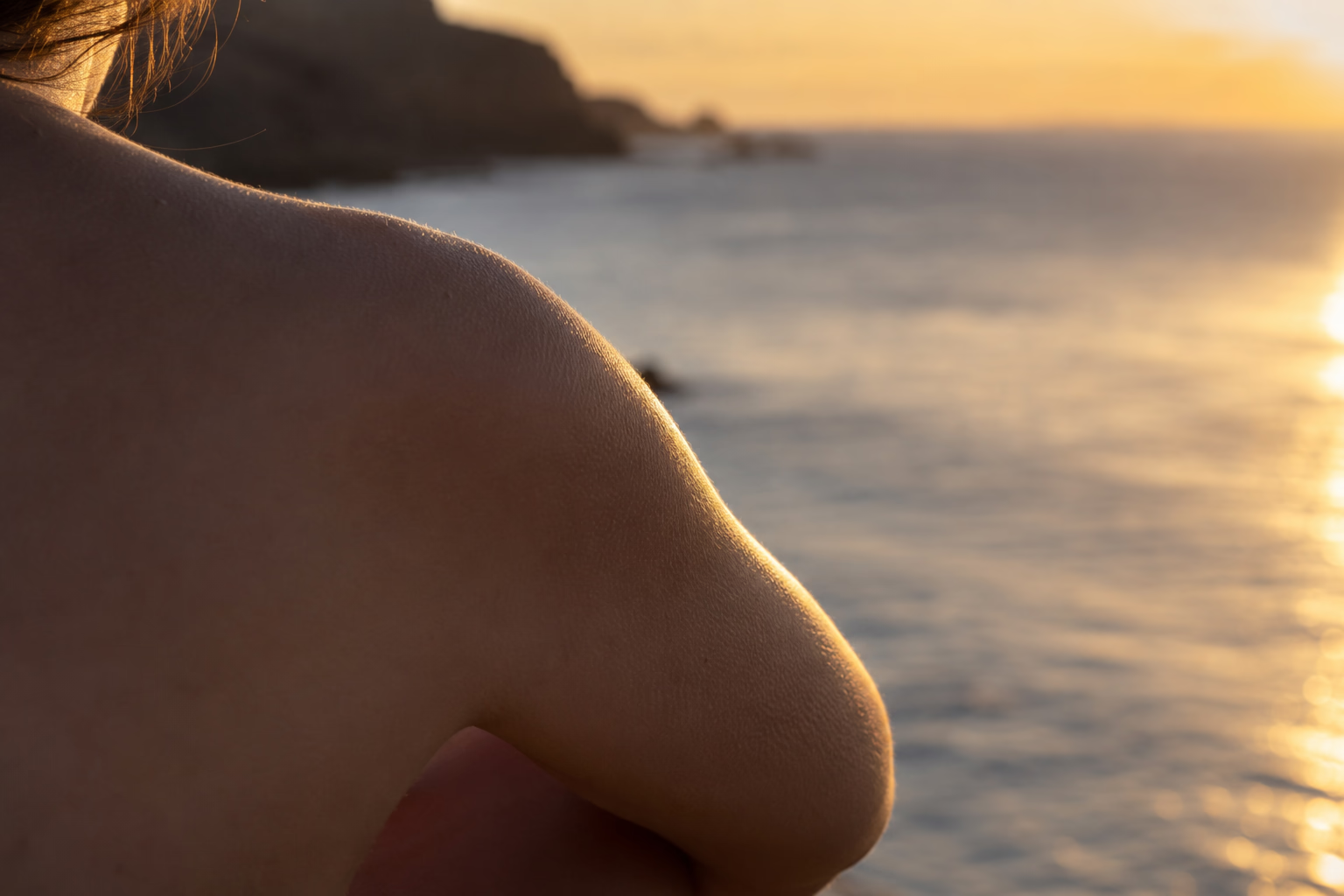
The light that enters the body every day, for weeks on end, inexorably alters the deep chemistry of perception, the speed of thought and the intensity of desire. The sensation of warmth gradually dissolves that armour of reserve and distance which the cold imposes as a survival mechanism.
Suddenly, the senses become immediately receptive again. Think, for example, of the pleasure of sinking into the ocean in mid-afternoon: the weight of salt water supporting your back, the cooler air settling on your shoulders as you emerge and the certainty that your skin is no longer defending itself from its surroundings, but yielding to them.
The body, once freed from the urgency of pain or climatic fatigue, discovers that its capacity to feel is not satisfied by physical recovery alone. Once health returns, it ceases to be an end in itself and becomes fertile ground for a broader vitality, a search for gratification, closeness and pleasure.
The paradox of Nordic communities in the Canaries: between protection and supervision
Set against this biological and emotional transformation, the microcosm that the northern countries have built on these islands offers a support structure of real value.
The churches, the school, the meeting places and the restaurants that bring back the flavours of home represent the greatest virtue of these communities: an extraordinary capacity for organisation and mutual support, creating a protective network in which people feel safe thousands of kilometres away. That cohesion has allowed several generations to live far from their own country without losing their cultural bearings or their sense of belonging.
Yet that same collective strength also has its limits. Life built around the club, the parish or the usual terraces is, by definition, a world in which everything is shared, where lives intersect openly and where you remain under the gentle but constant scrutiny of others.
It is the classic intimacy of small-town life: everyone knows who you meet, what you say and, above all, which subjects are best avoided.
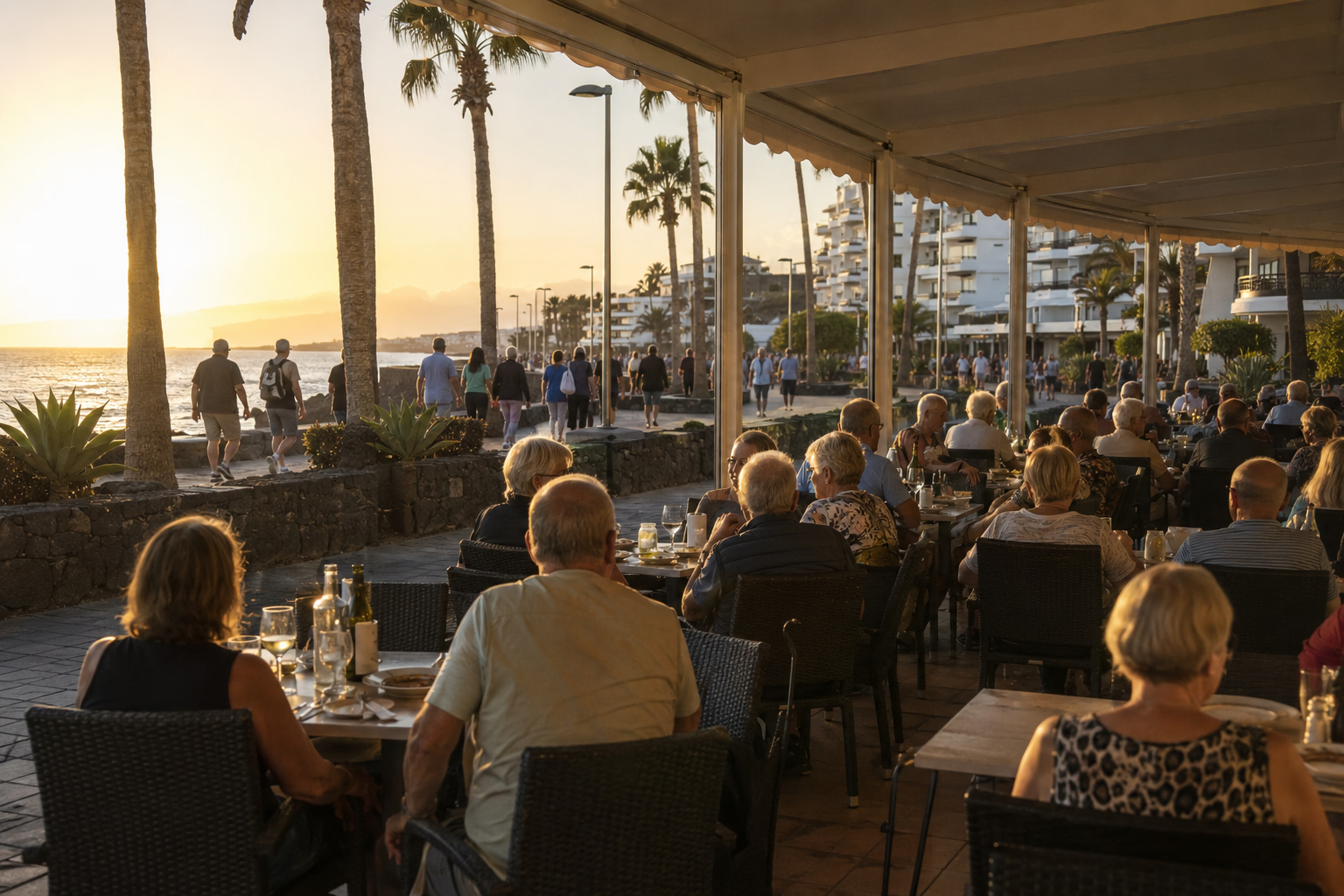
What this collective world cannot make room for is whatever lies outside the public realm: the possibility of a strictly private experience, of a closeness reserved for two people and of a fascination that does not need explaining the next day at a familiar café table.
Under the same light, another way of inhabiting the island
That is where I come in: between the comfort of the collective and the need for something intimate. In the middle of all that shared life, that private space can take two simple forms.
One is the possibility of a meeting in which my attention is entirely yours, where the conversation follows your interests and can flow naturally for hours without running dry.
The other is a different way of moving through the island you thought you knew perfectly: returning to the places you usually go, but in a different light, one that turns the familiar into something reserved for us alone.
There is one more factor, and on these islands it carries a different weight: time.
A weekend together has its own rhythm, but every choice has to fit inside those two days. For someone spending the winter here, the scale is different, and the real luxury is having no need to rush.
There is no pressure from the return flight, no urgency to concentrate everything at once. You can meet for the first time simply to get to know each other, with no commitments or expectations for the weeks that follow, and then let the experience settle. And if something clicks, there is plenty of time to meet again, whenever and however suits you.
You have absolute control over the pace, the distance and the space.
If you look back, the desire for a space like this comes from the same determination that brought you here. You had already made the harder and more important decision: you decided that your physical wellbeing, your need for light and your comfort were worth the effort of crossing an ocean and spending whole months in this corner of the Atlantic.
The choice to give yourself an intimate experience now does not need a chapter of its own: it is the natural continuation of that first step.
Author's note
Everything in this article that carries a date, a figure or a proper name comes from the sources listed below. They are in Swedish, Norwegian, Finnish, Danish and German, which is where this story lives. Some historical accounts contradict one another, and when that happens the note says so. The observations about how winter works on these islands today come from living here rather than from a document. The interpretations are mine.
Cited sources
- “Historia”. Vintersol (in Swedish), with the Spanish version. · The versions give different accounts: the Swedish one names Inga Rylander, Karl Henriksson and the state grants obtained through Ernst Michanek; the English and Spanish ones name only Rylander and Olle Ryding. The details in this paragraph come from the Swedish one. ↩
- “Öppenvårdsbehandling i varmt klimat” (in Swedish). 1177 · Region Sörmland, and “Rehabiliteringsvistelse inom Sverige och utomlands” (in Swedish). Västra Götalandsregionen. · Klimatvård is not a single national programme: each region decides and pays for it. The first source names the centres where it sends patients, Vintersol in Tenerife and Svenska Re in Gran Canaria; the second sets the fee the patient pays. ↩
- “Forskrift om behandlingsreiser til utlandet (klimareiser)” (in Norwegian). Lovdata. · The term klimareiser also appears in brackets in the regulation's title. The cost comparison in the next paragraph does not come from here but from “Tiltak 1: behandlingsreiser til utlandet” (in Norwegian). Norsk Revmatikerforbund, which is the patients' association and therefore an interested party. ↩
- “Vaikeista ihosairauksista kärsivät eivät pääse enää aurinkoon etelän lämpöön” (in Finnish). Yle. · The public funding that had supported these journeys for decades ended in 2022. The details are in note 14. ↩
- “Fra tilfældigheder til målrettet forskning” (in Danish). Psoriasisforeningen. · “In 1971 climate treatment becomes an option for psoriasis patients: they are sent to the Dead Sea with public funding.” ↩
- “Drabelig oppsving i flykapasiteten til Kanariøyene” (in Norwegian). Canaria Journalen, 17 August 2026. · These are airline seats offered for sale, not passenger numbers: 165,014 from Norway, of which 118,154 to Gran Canaria. ↩
- “Valle Marina” (in Norwegian). Norges Astma- og Allergiforbund. · The centre is run by the Norwegian asthma and allergy association, not by the state. The dates for the school and the club come from the institutions themselves: “Om skolen” writes “Skolen ble etablert i 1974 med bare 13 elever”, and “Om klubben” gives 2 March 1988. ↩
- “Sjømannskirken i Gran Canaria” (in Norwegian), the organisation's own chronology, and “Sjømannskirken på Gran Canaria”. Nordic Connection. · The organisation began operating there in 1987 from borrowed premises; the villa in Arguineguín dates from 1990 and the present seafront building from 2008. ↩
- “Svenska skolan Gran Canaria” (in Swedish), the school’s own site: “Svenska skolan Gran Canaria startades 1965”. On the start in Las Palmas and the move south, “Gran Canaria bästa platsen för den som vill må bra” (in Swedish). Sydkusten: the Swedish colony settled in Las Palmas in the nineteen sixties and the school was there too, “när de flesta svenskar började söka sig dit flyttade skolan”. On the teaching, “Svenska skolan på Gran Canaria” (in Swedish). Skolverket, Utbildningsguiden, and “Samarbetsskolor” (in Swedish). Sofiadistans, the City of Stockholm's distance school. · The school provides in-person teaching from the preparatory class through year six; for the years above that and upper secondary it supervises pupils enrolled on distance courses. Swedish schools abroad follow the läroplan, the national curriculum, and teach in Swedish: “Svensk grundskola utomlands” (in Swedish). Skolverket. ↩
- “Svenska Kyrkan Gran Canaria (Las Palmas och San Agustin)” (in Swedish), archive inventory C020 ark0151. Svenska kyrkan. · The parish registers begin in 1967; among the papers is the entry “Dokument från församlingens grundande 1968”; the Las Palmas drawings are from 1953 and 1970, those for San Agustín fall between 1984 and 1987. The present address is on the parish page: “Svenska kyrkan Gran Canaria” (in Swedish). ↩
- “A Swedish legacy in the south of Gran Canaria”. Maspalomas24h. · The sculpture is by Marta von Poroszlay and was unveiled on 10 November 2012. ↩
- “Vi behöver din hjälp” (in Swedish). Svenska kyrkan Gran Canaria. · The parish itself says it: “det inte längre är möjligt att betala den hyra vi tidigare hade för vår kyrka”. The story was also reported by Dagen on 30 April 2024, though that paper asks for a subscription. ↩
- “Gran Canarian suomalainen evankelis-luterilainen seurakunta” (in Finnish). · The parish operates seasonally, from October to April, and holds its services at the Templo Ecuménico El Salvador in Playa del Inglés. ↩
- “Vaikeista ihosairauksista kärsivät eivät pääse enää aurinkoon etelän lämpöön” (in Finnish). Yle, 15 December 2021. · The support came from STEA, the Finnish public fund for social and health associations, and ended because the law does not allow Kela to finance rehabilitation abroad. ↩
- “Valle Gran Rey: Warum es als ‚Klein-Deutschland‘ gilt” (in German). Reise Pioniere. · The source links its origins to the alternative culture of the 1970s and to people leaving conservative West Germany. It does not put a number on those pioneers. ↩
- “Bevölkerung: Deutsche rückläufig auf den Kanaren” and “Deutsche auf Fuerteventura” (in German). · All the figures are as of 1 January 2023. Across the islands as a whole, registered Germans fell from 45,580 in 2012 to 24,425 in 2021. ↩