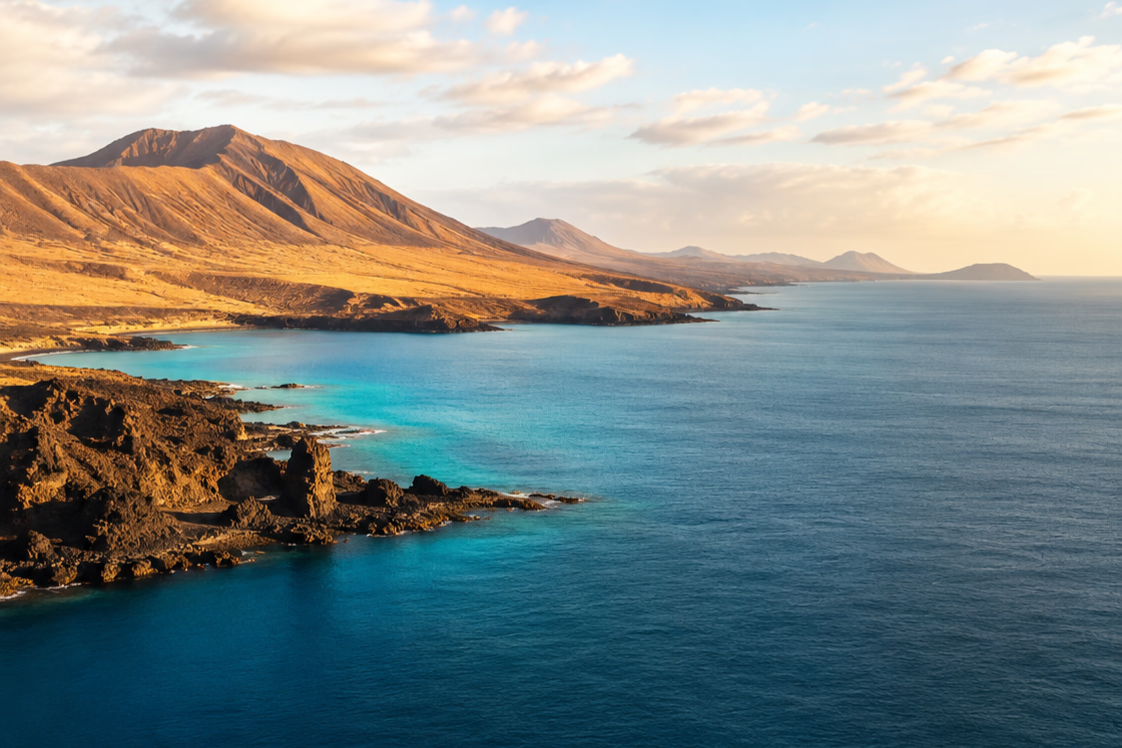
The map of an archipelago never quite matches the map drawn by those who live there or seek it out. To the casual eye, the Canary Islands are simply a catalogue of volcanic sands, trade winds and an eternal spring guaranteed by geography. Yet another map lies over the official one, measured not in kilometres of coastline but in the intensity of the spaces of freedom that each place is able to open.
That second map is the one that matters to anyone travelling in search of more than sunshine: a protected interlude shaped by freedom, rapport and the chance to switch off, where the rules of everyday life are suspended.
This is neither a mystical retreat nor a simple balm for wellbeing. It is a tangible space in which shared time and intimacy are treated with the same attention and care used to select an exceptional place to stay or a wine from pre-phylloxera vines on the slopes of Mount Teide.
And that map changes with every island. Deciphering the archipelago of desire requires an understanding that each island, and each side of the same island, offers a different answer to the need for intimacy, exploration and anonymity. The landscape changes the rhythm, and the rhythm changes what a woman dares to think or ask for.
The duality of the islands: north versus south
In both Tenerife and Gran Canaria, geography imposes an almost theatrical division. North and south differ not only in landscape and hours of sunshine, but also in the pace of encounters and the kind of anonymity sought by the woman who travels, whether alone or in company.
The north protects through accumulation: clouds, lush vegetation, historic façades that seem to have learnt how to keep secrets, and an untamed sea that does not yield easily. Here, anonymity comes from blending in: she becomes part of local life until the outside world, with its schedules and labels, is placed on pause.
The south protects through exposure: everything is visible and, precisely for that reason, other people’s gaze loses its importance. Where so many people move through the same space at once, no one stops to look at anyone. The body ceases to be a focus of attention and becomes a natural fact, one among hundreds. That collective indifference acts as an implicit permission that many people discover with surprise.
They are two opposing ways of understanding discretion. Choosing one or the other says more about the person deciding than any planned itinerary could.
Gran Canaria: two faces of freedom
Gran Canaria brings together two forms of freedom that rarely exist so close to one another. Las Palmas offers the urban, cosmopolitan anonymity of a city open to the Atlantic; Maspalomas and Playa del Inglés, by contrast, offer a social anonymity born of exposure and free from judgement.
In the capital, no one knows who you are; in the south, no one cares who you were before you arrived.
Las Palmas: the city that asks no questions
Las Palmas de Gran Canaria belongs in another category because it is not a tourist backdrop; it is a real port city with Atlantic roots and its own working and cultural life. This makes it the ideal setting for an urban encounter.
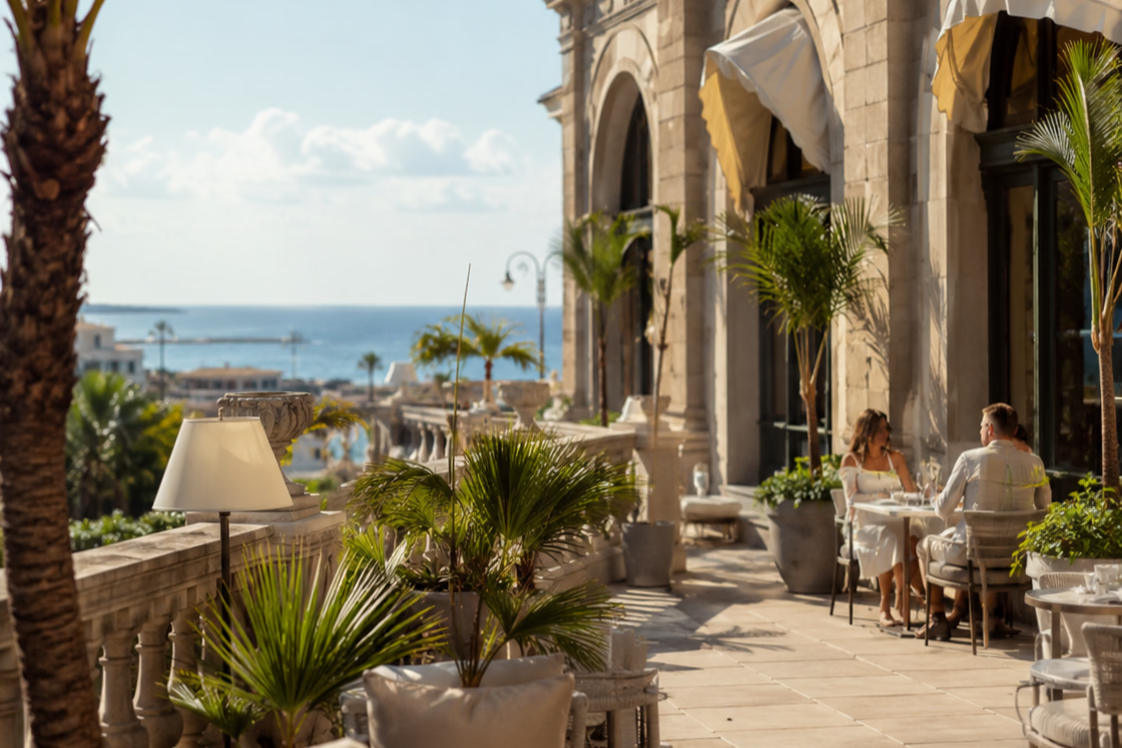
The capital’s historic establishments embody a philosophy of hospitality in which discretion is not an optional extra, but the very structure of the place. Their salons, which have welcomed European aristocracy and intellectual life for more than a century, offer an atmosphere of grandeur and privacy that no beach hotel can imitate.[1]
In these surroundings, having dinner together or enjoying a cocktail on a terrace overlooking the sea feels entirely natural, without arousing suspicion or attracting inquisitive glances. A male companion fits effortlessly into a world of business, art and diplomacy.
The capital offers that subtle play of mirrors in which reality and appearance merge with perfect elegance. In a great city, intimacy need not hide from the world: it can be lived fully within it.
Southern Gran Canaria: Maspalomas and shared permission
With Playa del Inglés as its epicentre and the dunes of Maspalomas as its backdrop, the south of the island has spent half a century as one of Europe’s recognised centres of freedom in love and sexuality.[2]
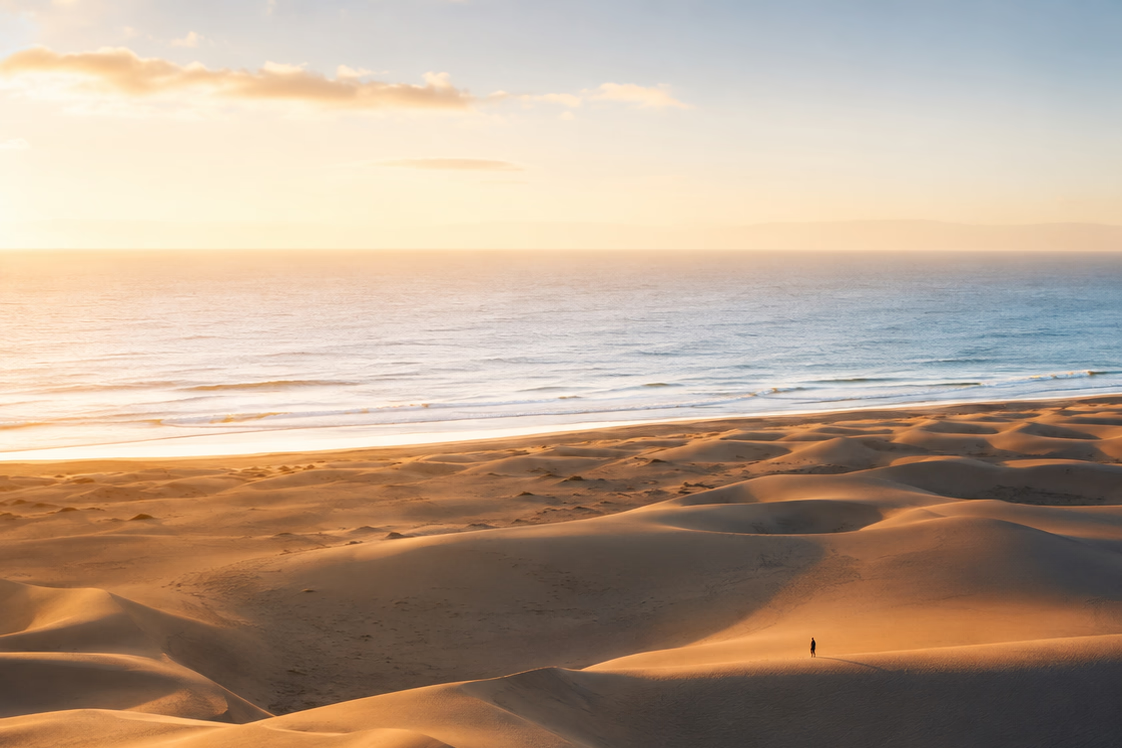
Much of this tradition was driven by LGBTQ+ tourism. Over the decades, a diverse public arriving from across Europe turned the area into a place where no choice seems remarkable, simply because every choice exists alongside the others. The result benefits every visitor: this is probably the corner of Europe where people are asked to explain themselves least.
The dunes add a beautiful paradox: they are an open space that also creates a sense of frontier; they do not conceal, but they separate. This is where the power of Maspalomas begins: in the possibility of stepping away without disappearing.
Its fame, however, often produces simplistic readings. There is a tendency to reduce companionship in these surroundings to a standard formula, as though every interaction answered only to immediacy or rapid consumption. Reality is far more complex: anyone seeking unhurried company here is not pursuing the urgency of the night, but an anchor of calm amid constant overstimulation.
For couples, this permissiveness opens a space for exploration. In the south, a scene has developed around villas and venues designed for shared encounters. These settings provide a safe framework in which to explore the boundaries of mutual trust.
Taking the first step often raises doubts about the unwritten rules within the relationship. That is why recommended reading includes this detailed article on how to have a threesome as a couple, which considers the process and its psychological implications with the calm and respect the subject deserves.
Tenerife: between seclusion and clarity
Tenerife has a more dramatic geography, where the shift from one side of the island to the other can be felt within only a few kilometres, transforming both the landscape and the traveller’s inner disposition. In the north, Mount Teide holds the clouds and wraps the landscape in moisture; in the south, it clears them away to reveal an open sky.
The north suggests depth; the south, clarity. The same person may need one or the other depending on the moment of her search.
Northern Tenerife: a refuge for the unexpected
From the Orotava Valley and Puerto de la Cruz to the colonial streets of San Cristóbal de La Laguna, the green of the laurel forest, the humidity and the architecture of wooden balconies invite seclusion. Travellers move through this area slowly and quietly. No one arrives in the north by accident, and that can be felt in the quality of its atmosphere.
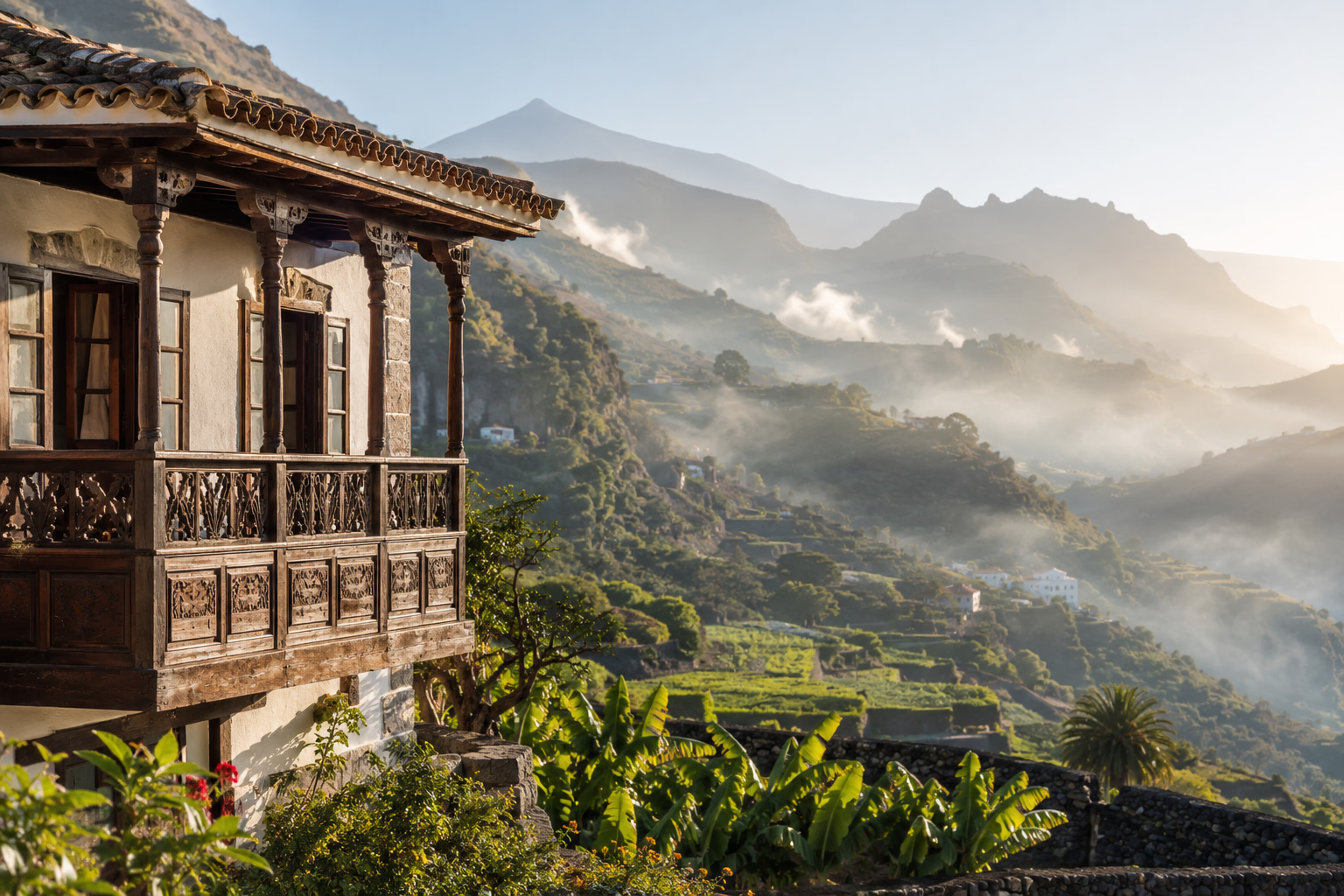
For anyone travelling in search of complete disconnection, the north offers a rare luxury: time without urgency. Conversation before the untamed sea or intimacy within walls of volcanic stone takes on a reflective tone here. It is an especially fitting setting for those who value intellectual rapport, unhurried walks and the pleasing sense that the outside world is standing still. In this context, companionship does not take centre stage; it quietly sustains the experience.
Discretion here is achieved by joining the local pulse, far from the crowds. The north offers the purest freedom: the freedom to enjoy an entire day that belongs only to her, reconnecting with her senses and owing no one an explanation.
It is an intimacy nourished by imperfection and spontaneity: a walk interrupted by mist, or a view that plays at hiding among the clouds. Nothing is planned too rigidly, and attention becomes finer as a result. To accompany someone well in this setting is to know which hours are best left unplanned.
Santa Cruz de Tenerife: intimacy in motion
Santa Cruz belongs neither entirely to the seclusion of the north nor to the clarity of the south. Around Plaza de España, where the city opens towards the port, intimacy is born from movement: an afternoon may begin between the water and stone of the square, continue on the terraces of Avenida de Anaga and end high above the streets, on the rooftops of its city hotels, with the lights of the city centre and the Atlantic sharing the horizon.
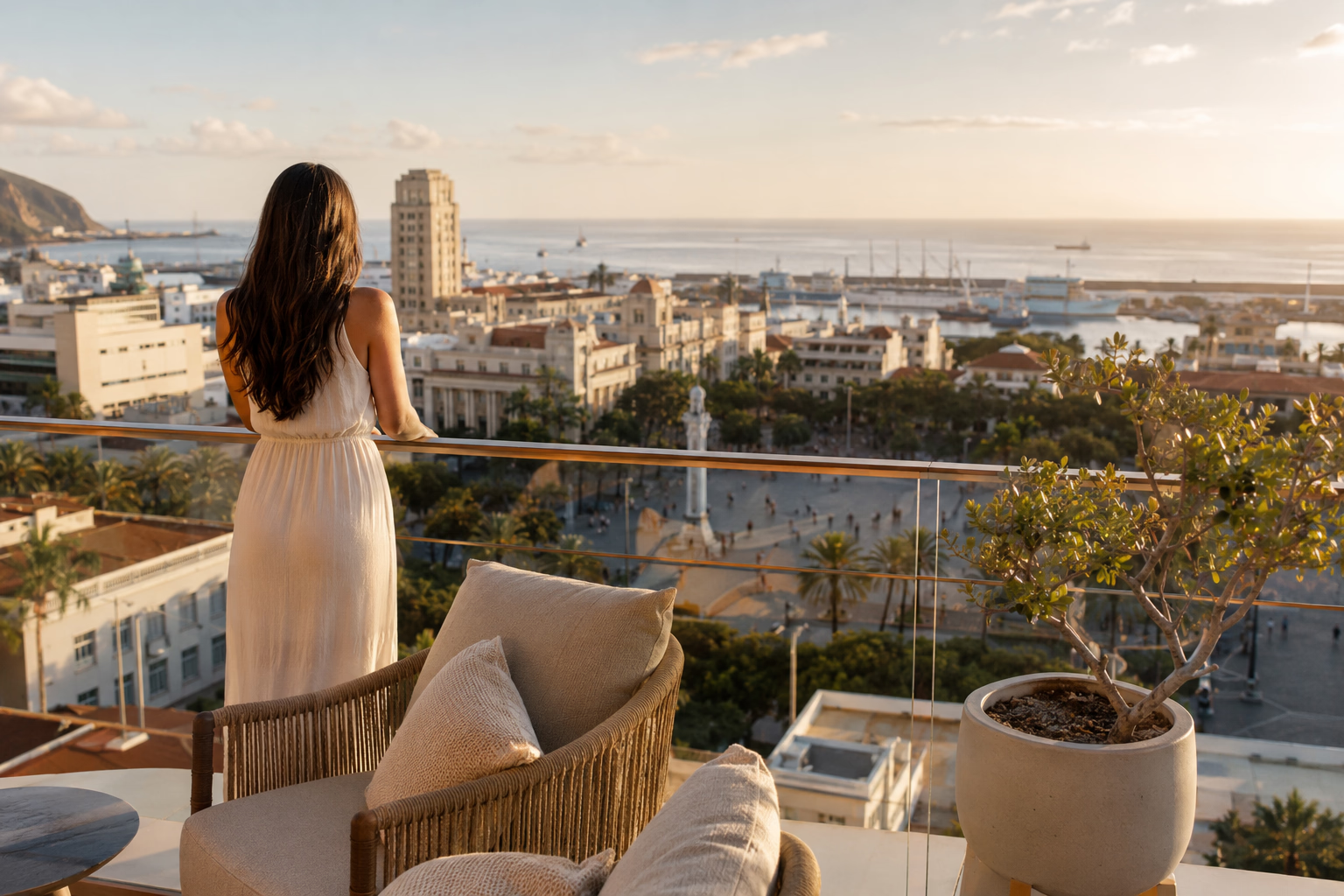
That continuity offers something singular, and a good male companion knows how to read it: there is no need to withdraw from the world in order to change the tone. It is enough to rise a few floors, leave the traffic below and allow the city to become a distant backdrop.
Santa Cruz proposes a vertical intimacy, built in layers. The exposure of the street, the lightness of a terrace and the privacy of a rooftop can all belong to the same night.
Costa Adeje and southern Tenerife: privacy as architecture
If southern Gran Canaria protects through custom, southern Tenerife does so through design. In areas such as Costa Adeje, Guía de Isora and Playa de las Américas, a high-end hospitality infrastructure has developed with a particular focus on privacy, where seclusion and architectural design form part of the experience.[3]
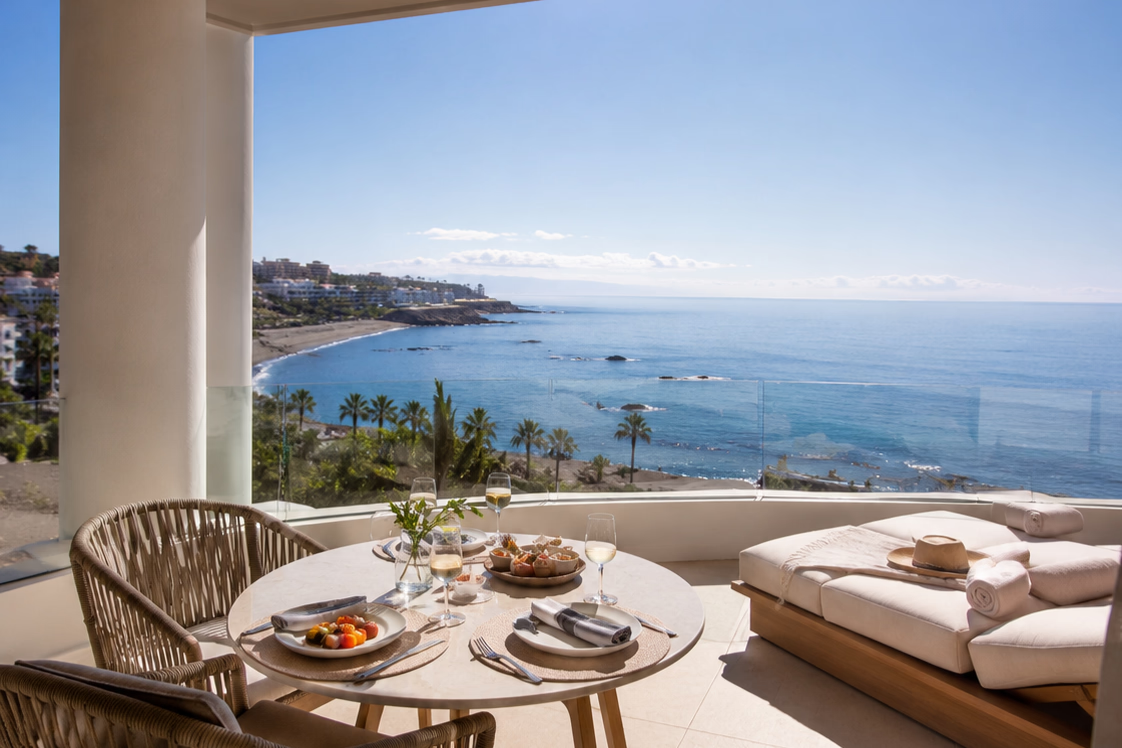
The resorts in this area redefine the idea of a protected space. They are not merely hotels; they are true citadels of privacy, with restricted access and highly qualified staff for whom discretion is non-negotiable.
Here, intimacy becomes an organic part of the experience of rest. The woman staying in one of these villas is not seeking to escape, but to expand her life for a few days, free from other people’s gaze.
Encounters unfold naturally on terraces open to the ocean, over private dinners where time appears to stop, or during days of sailing with the sea as the only witness. Southern Tenerife provides the perfect aesthetic frame in which intimacy can be enjoyed as another dimension of personal wellbeing.
Lanzarote and Fuerteventura: distilled landscapes and infinite horizons
The two eastern islands follow rules of their own. Without the marked north-south duality of the central islands, without the urban pulse of Las Palmas and without the density of Maspalomas, they offer a far more unusual luxury: structured emptiness.
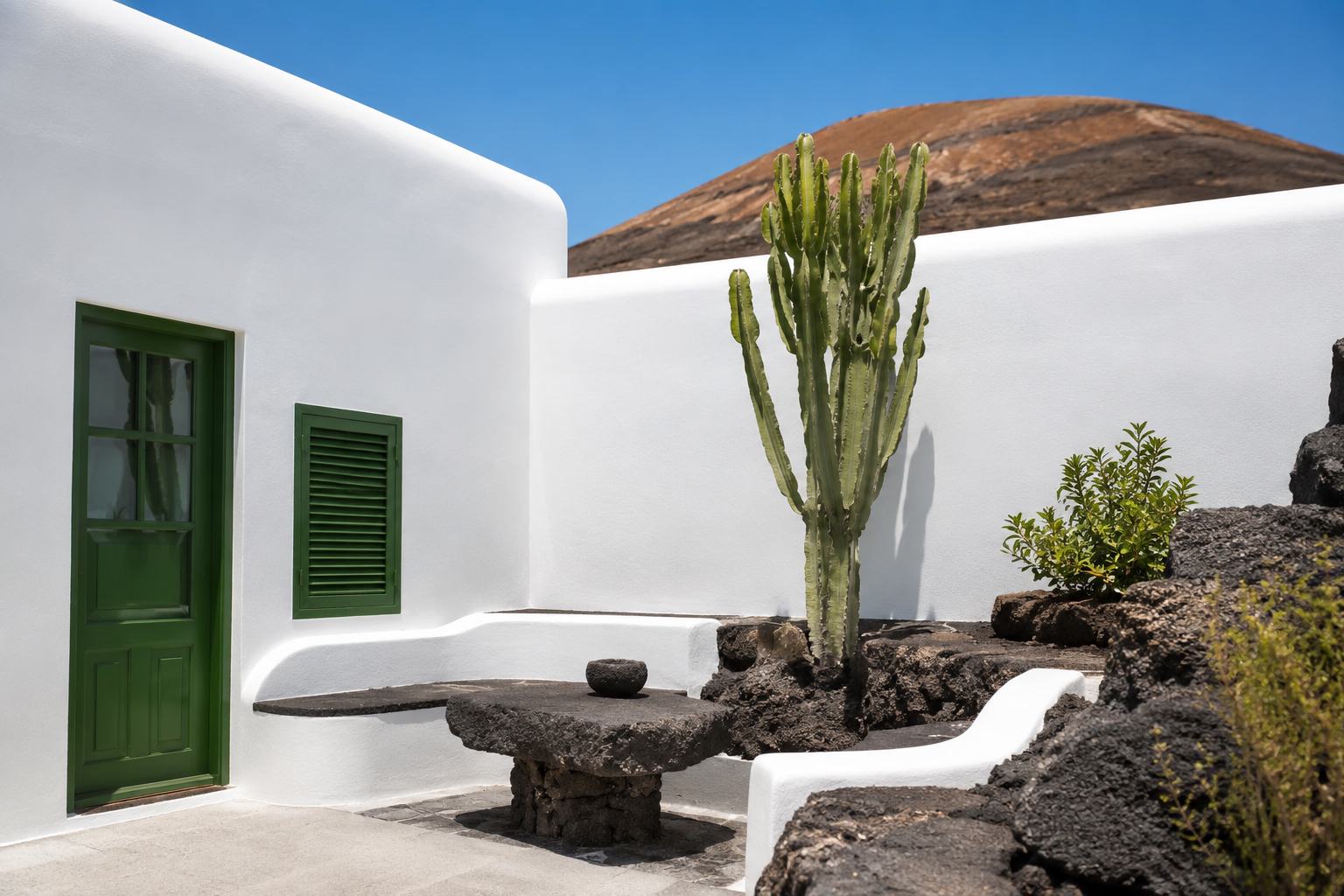
Lanzarote is an island of design and restraint: shaped by the aesthetic legacy of César Manrique, it presents a harmony of whitewashed walls, green-painted woodwork and dark volcanic stone. It is a setting of clean lines and unhurried rhythm, ideal for tasting a wine born from ash in La Geria. For anyone seeking intimacy without noise or distraction, Lanzarote offers a minimalist canvas where nothing competes with good conversation.
Fuerteventura is the expression of openness: kilometres of untouched, solitary beaches, a constant wind combing the sand and a pure light that invites the masks of routine to fall away. In places such as Cofete or the dunes of Corralejo, the body recovers its natural ease. It is the ideal destination for anyone wishing to disappear into the immensity of open space, where solitude liberates.
Neither island is designed for an intense social life. They are islands for those who know exactly what they want and choose to experience it in the best company.
No island is company in itself. The landscape sets the scene; presence does the rest.
Gigolo, escort or male companion in the Canary Islands: choosing a person over an agency
Anyone searching for a gigolo, escort or professional male companion in the Canary Islands will usually encounter directories and agencies first: catalogues designed to compare profiles, availability and price. The search terms may change, but the decisive difference lies in the model, not the label.
When intermediation is driven by volume, the person risks being reduced to a listing. Choosing one particular person follows another logic: a name, discernment, continuity and responsibility for the way he is present and shares the experience.
However idyllic the destination, the landscape alone cannot guarantee the experience. Two people may look at the same ocean and inhabit opposite emotional realities. The true difference lies in the quality of presence: a real person is accountable for the way he accompanies you; an anonymous structure, by contrast, is accountable only for its availability. That difference is best heard in the voices of those who have already seen it for themselves.
Desire belongs to the person travelling, while the territory defines the rules of the game. My role is to offer the perspective of someone who knows both maps in detail:
- The north asks for conversation, pause and rapport.
- The south invites us to embrace physical pleasure, ease and lightness.
- The capital demands worldliness, elegance and urban fluency.
- The eastern islands call for restraint, disconnection and a presence that never intrudes.
Misreading these codes can diminish a journey far more than any unexpected turn in the weather. Geography is a powerful ally, but it cannot replace the sensitivity of a shared reading.
In the end, the Canary Islands are whatever each person needs them to be. A refuge of mist and long conversations after lunch in the north, an enclave of urban restraint in the capital, a field of experimentation among the southern dunes, or a sanctuary of marble and privacy in the sunlit resorts of Adeje. The territory remains unchanged, but the way we choose to inhabit it is what defines our true freedom.
That is why the only choice that truly requires preparation is not which island to fly to, but which version of yourself you want to step off that plane.
TL;DR: the geography of intimacy in the Canary Islands
The following structure summarises the dynamics, key settings and atmosphere of each environment considered across the archipelago.
| Geographical location | Setting and atmosphere | Dynamic of the experience | Context of the encounter |
|---|---|---|---|
| Northern Tenerife and Gran Canaria | Green, humid landscapes, colonial city architecture and a relaxed residential pace. | Anonymity through blending in, slow time, and a focus on conversation and intellectual rapport. | A space for listening, unhurried walks and intimate reconnection without the rush of the conventional tourist circuit. |
| Las Palmas de Gran Canaria | A cosmopolitan urban setting with historic surroundings of long tradition. Discretion integrated into everyday life. | A corporate and cultural context: dinners, cocktails and natural integration into local life. | A presence that fits naturally into cultural, corporate and urban settings. |
| Santa Cruz de Tenerife | A capital open to the port: square, terraces and urban rooftops, with a vertical and contemporary rhythm. | Intimacy in motion and in layers, from street to rooftop without leaving the city. | A versatile presence that follows the city’s rhythm and knows when to move from exposure to privacy. |
| Southern Gran Canaria (Maspalomas / Playa del Inglés) | A landscape of dunes, constant sunshine and half a century of freedom in love and sexuality as a shared norm. | Visible freedom, exploration of a couple’s boundaries, intense surroundings and anonymity through exposure. | A trusted presence offering balance, safety and respect during exploration or the experience of a threesome. |
| Southern Tenerife (Costa Adeje / Guía de Isora / Playa de las Américas) | High-end resorts, private villas and architecture designed to preserve privacy. | Days without witnesses, an expansion of one’s life, bodily rhythm, tranquillity and aesthetic pleasure. | Integration into a stay centred on rest, where intimacy is experienced with discretion, care and respect. |
| Lanzarote and Fuerteventura | Austere volcanic landscapes, endless untouched beaches, calm and isolation. | Disappearing into open space and experiencing deep intimacy without external distractions. | A thoughtful presence that accompanies retreat and disconnection without interrupting them. |
Author's note
This article combines direct professional experience, personal knowledge of the different island environments and consultation of public sources on geography, heritage, tourism history and island culture.
The descriptions of atmosphere, discretion and rhythm are editorial interpretations born of that experience. They are not official classifications, nor do they imply that every person experiences each destination in the same way.
Historical or verifiable claims are accompanied by the relevant sources. The information is reviewed periodically, and the date of the latest update is shown on the page.
Cited sources
- «Hotel Santa Catalina, la leyenda sigue escribiéndose», Turismo de Gran Canaria (in Spanish). — More than a century of European aristocratic and intellectual life in Gran Canaria's capital. ↩
- «Proudly Gran Canaria: 60 years of LGTBI history», Gran Canaria Tourist Board. — Maspalomas and Playa del Inglés as a recognised European centre of freedom in love and sexuality since the 1960s. ↩
- «Costa Adeje, a luxury destination», Costa Adeje Turismo. — The largest concentration of high-end hotels in southern Tenerife. ↩